Your app isn't getting downloads? Learn how to rank higher on Google Play with ASO. Real case study: from 1-3 to 15-45 daily downloads in 5 languages.
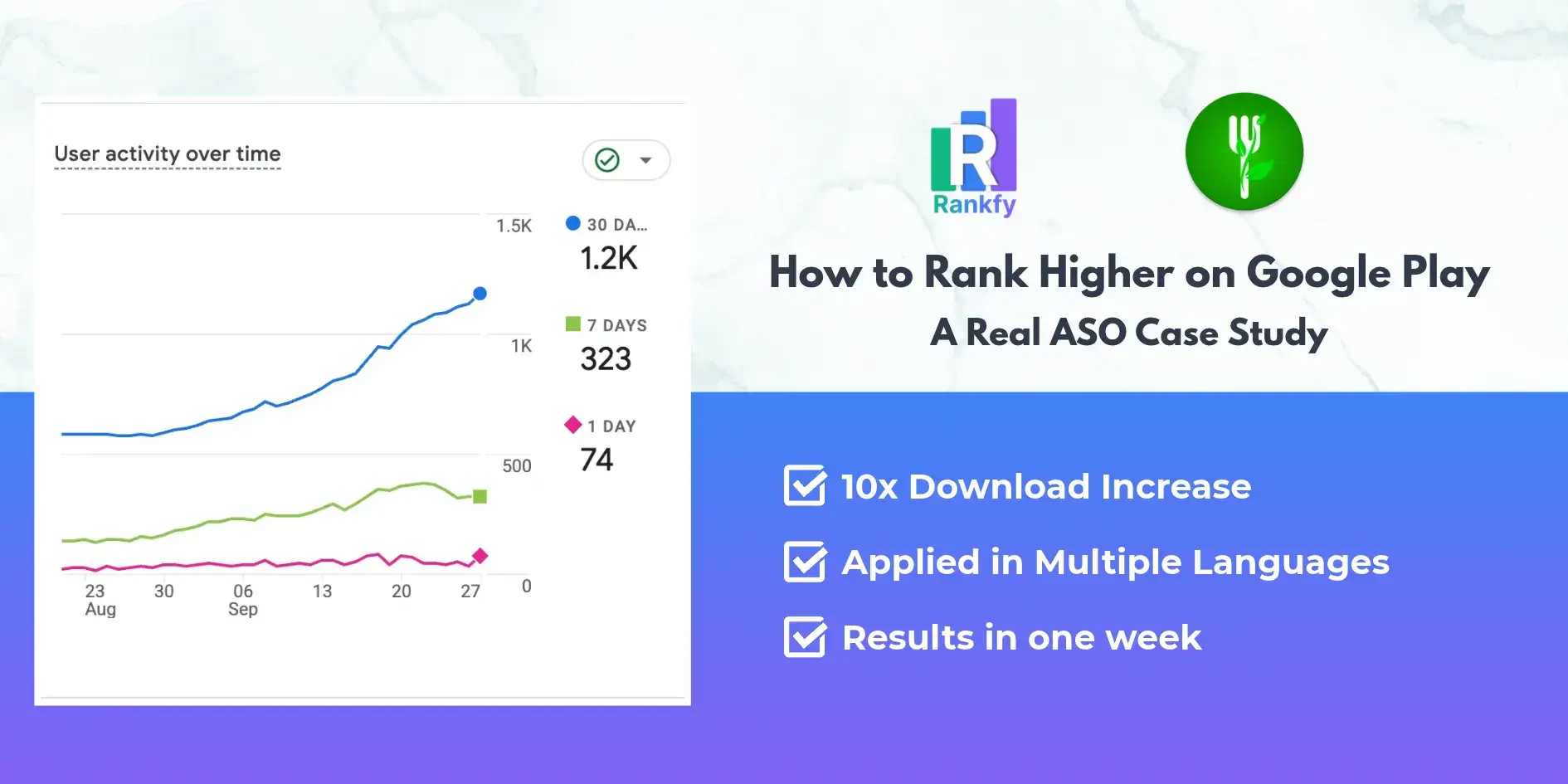
How to Rank Higher on Google Play: A Real ASO Case Study
If your app isn't getting downloads, the problem is usually not the app. It's that nobody can find it. Here's how one app went from 1-3 to 15-45 daily downloads — and how you can apply the same fix.
If your app isn't getting downloads, the problem is usually not the app. It's that nobody can find it.
Most indie developers make the same mistake: they optimize for the app name, not for what users actually search for. We did it too — with an app that went from 1-3 to 15-45 daily downloads after we fixed it.
This is the story of that fix, and how you can apply it to your app.
Why Your App Isn't Getting Downloads (It's Not What You Think)
The mistake is almost universal. When you launch an app, you naturally optimize for the name you gave it. You assume people will search for that name and find you.
They won't.
Nobody searches for an app they've never heard of. People search for what they want to do, not for the name of the app that does it.
| What You Have | What Users Actually Search |
|---|---|
| Your app name (e.g., "Go Vegan") | What the app does (e.g., "vegan recipes") |
| Your brand | The problem you solve |
| What you call it | What they type |
In the case we're about to show, the app was ranking #25 for its main keyword (when it appeared at all), and on some days it would drop out of search results entirely (position #255+).
How to Find the Right Keyword for Your App
Before you change anything, you need to know what keyword to focus on. Here's the framework:
1. Start with what the app does, not what it's called
If your app helps people cook vegan food, the keyword is "vegan recipes", not "Go Vegan". If it helps people track workouts, it's "workout tracker", not "FitPro".
2. Check if the keyword has volume and competition
A good keyword has three qualities: enough people search for it, not too many apps compete for it, and the apps ranking for it are actually similar to yours.
3. Test it in one country first
Don't try to rank globally on day one. Pick one country, one language, one keyword. Once you rank there, expand.
How to Rank Higher on Google Play (Step by Step)
Here's the process that took an app from 1-3 to 15-45 daily downloads:
Step 1: Choose one primary keyword
Not five. Not ten. One. The keyword that best describes what your app does. Everything else comes after.
Step 2: Put the keyword where it matters
Title, short description, and full description. The algorithm looks at all three, but the title carries the most weight.
Step 3: Apply the same logic in every language
If the app does the same thing in every country, the keyword should be the same idea — translated to the local language. Here's what that looks like across 5 markets:
| Language | Old Focus | New Focus (Keyword) |
|---|---|---|
| English (US/UK) | App name | vegan recipes |
| Portuguese (BR/PT) | App name | receitas veganas |
| Spanish (ES/MX/AR) | App name | recetas veganas |
| French (FR/CA) | App name | recettes vegan |
| German (DE/AT/CH) | App name | vegane rezepte |
Step 4: Wait 2-4 weeks before judging
The algorithm takes time to pick up changes. Small apps take longer. Don't revert after 3 days — that's the most common mistake.
The Results: From Invisible to #3 in 5 Languages
After applying the change, here's what happened in the app we used as the case study (Go Vegan):
| Metric | Before | After |
|---|---|---|
| Position for "vegan recipes" (English) | #25+ | #3 |
| Position for "receitas veganas" (Portuguese) | Invisible | #3 |
| Position for "recetas veganas" (Spanish) | Invisible | #3 |
| Daily downloads | 1-3 | 15-45 |
We went from being invisible to ranking #3 for the main keyword in multiple languages. The impact on downloads was immediate and sustained: 15 to 45 downloads per day, depending on the day and the market.
What Happens When Your App Finally Ranks (It's Not What You Think)
This is the part that surprises most developers. Before the change, the problem was acquisition: how do we get people to find the app?
After the change, the problem became monetization: how do we convert these new users into paying subscribers?
That's a completely different problem — and a much better one to have.
| Before | After |
|---|---|
| Problem: Nobody finds the app | Problem: How to convert new users |
| Focus: Getting downloads | Focus: Improving retention and conversion |
| Stage: Survival | Stage: Growth |
For any indie developer, this is the shift you want. Getting downloads is hard. But once you have downloads, you have data. You have feedback. You have a real product to optimize.
5 ASO Lessons You Can Apply Today
- Stop optimizing for your brand name. Nobody searches for an app they've never heard of. Optimize for what the app does.
- Think in keywords, not in brand. Your brand is what you call the app. The keyword is what users type. They're not the same thing.
- Apply the same logic across every market. If the app does the same thing in every country, the keyword should be the same idea — translated to the local language.
- Use a tool to see where you rank. You can't fix what you can't see. Track your keywords in every country and language where you want to grow.
- Wait a few weeks before judging. The algorithm takes time to pick up changes. Don't revert after 3 days.
FAQ: Ranking on Google Play with ASO
How long does it take to see ASO results on Google Play?
For small apps, 2-4 weeks. For apps with more downloads, faster. The app in this case study took about 3 weeks to see the first change.
Can I rank #1 for a keyword with a new app?
Not immediately. Start with long-tail keywords (lower competition), rank there, then move to head terms. Trying to rank for a head term on day one is the fastest way to fail.
Should I optimize for my app name or keyword?
Keyword. Nobody searches for an app they don't know. Optimize for what the app does, not for what it's called.
How many keywords should I focus on?
Start with 1 primary keyword. Once you rank, expand. The app in this case study focused on "vegan recipes" first, then expanded to other markets.
Does ASO work for small apps?
Yes, but slower. Small apps need more time for the algorithm to pick up changes. The key is patience and consistency — not changing everything every week.
Ready to Do the Same for Your App?
Start by finding out where your app ranks for the keywords that matter. Rankfy shows you your position in every country and language — so you can see exactly where to focus.
See where your app ranks in every country
Get started free →